Aluminium Cans vs Glass Bottles for Export Beverages: 330ml, 500ml and Glass
Comparing aluminium cans (330ml, 500ml) and glass bottles on technical, logistics and distribution factors to help importers pick the right beverage packaging.

Packaging: A Strategic Decision From The Very Start Of A Project
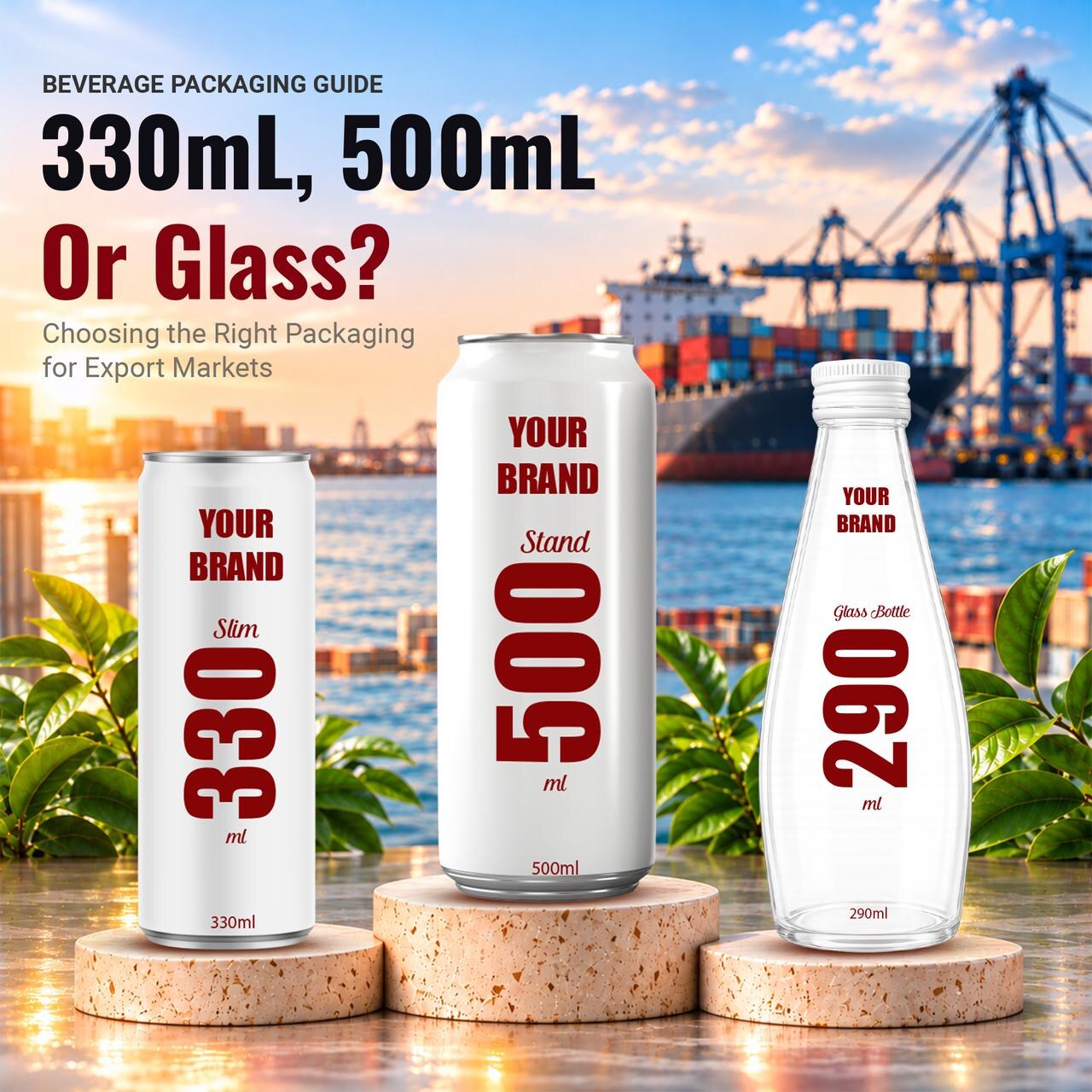
In beverage processing and export, packaging is not a decision left to the end of production. It is a key component of the product, logistics and distribution equation from the moment a project takes shape. A sound packaging decision must balance, at the same time, the preservation of sensory quality, loading and shipping efficiency, and how well consumers in the target market accept it.
In practice, no packaging format is perfect for every case. Each option — from the standard 330ml aluminium can to the 500ml can and the glass bottle — has its own technical characteristics and application boundaries. Understanding the nature of each format helps importers identify the option that best fits their business model and local distribution strategy.
Aluminium Cans Vs Glass Bottles: Technical Comparison Table
The table below summarises the main technical criteria and application direction across the three common packaging formats:
| Analysis criterion | 330ml aluminium can | 500ml aluminium can | Glass bottle (290–330ml) |
|---|---|---|---|
| Packaging weight | Lightweight | Lightweight | Heavier |
| Mechanical durability & logistics | Break-resistant, good impact tolerance | Break-resistant, good impact tolerance | Prone to cracking under strong impact |
| Light-blocking ability | Good light barrier | Good light barrier | Depends on bottle colour |
| Effect on loading | Optimises container space | Optimises container space | Affected by packaging weight |
| Recyclability | High recovery & recycling rate | High recovery & recycling rate | Recyclable, energy-intensive to mould |
| Distribution channel fit | Mass retail, convenience stores | Large supermarkets, refreshment & sports | Retail, restaurants, hotels, food service |
A Technical Look At Aluminium Cans Vs Glass Bottles
The choice between aluminium cans and glass bottles represents two different commercial directions in the beverage transport chain, calling for consideration based on the real characteristics of each product line.
Impact On Logistics Cost And Container Efficiency
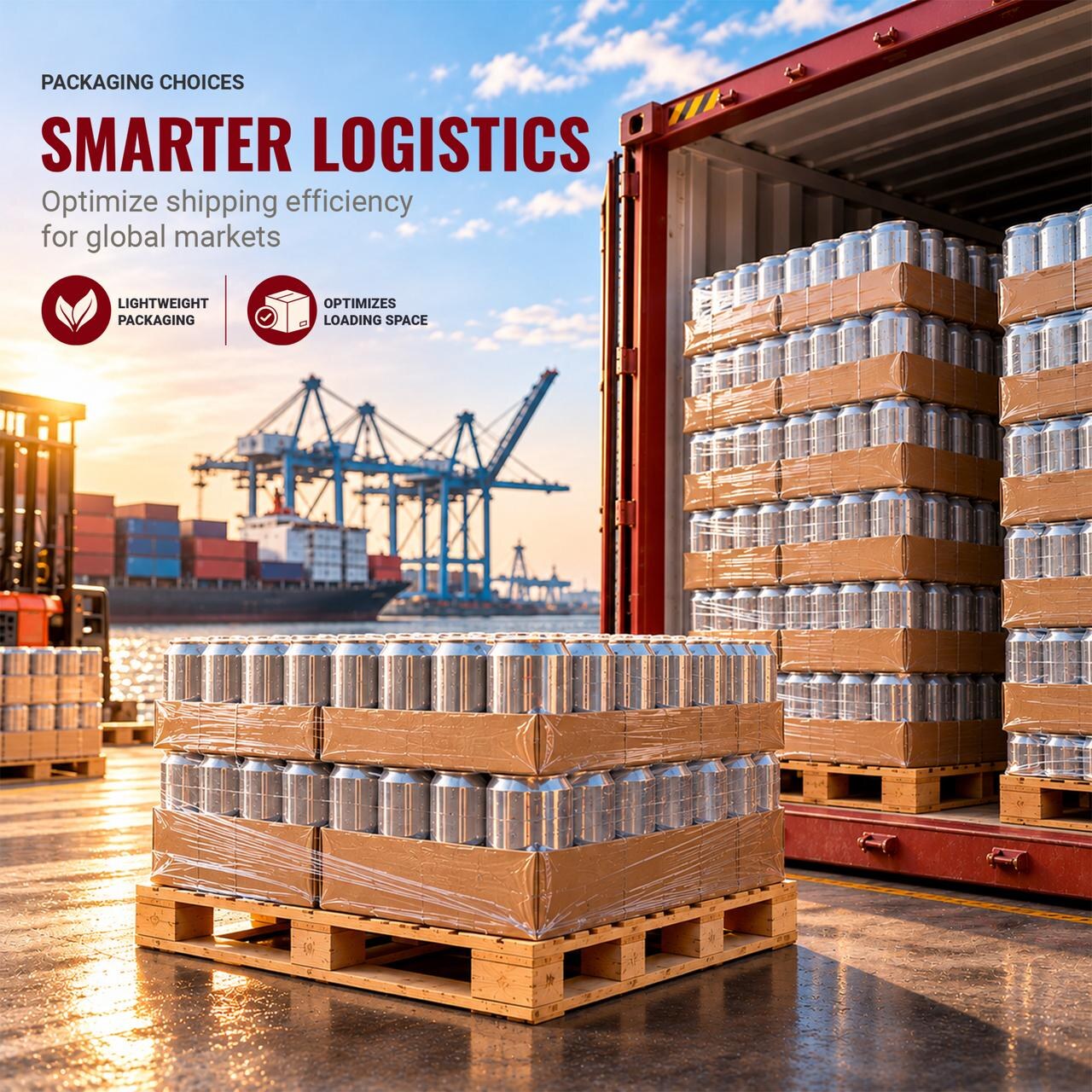
The weight of a glass bottle usually accounts for a significant share of the total weight of a shipment. In sea freight, glass-bottle orders often approach the route's permitted weight limit before the container's volume is fully used. Aluminium cans of 330ml and 500ml, with their light packaging weight, let importers maximise the number of units per shipment, helping optimise logistics cost per unit depending on the carton specification, pallet and shipping route.
Preserving Sensory Quality
Aluminium cans have the advantage of forming a protective layer that limits the effect of light and the outside environment. This characteristic helps maintain the colour and flavour stability of fruit juices and agriculture-based beverages during storage. Glass bottles, meanwhile, require more careful light protection; in return, glass is chemically inert, does not interact with the acidic components of juice, and offers visual clarity and a solid feel in use.
Managing Transport Risk And Brand Positioning
Along a transport chain that passes through several transshipment ports, glass-bottle packaging requires careful securing to limit the risk of cracking from mechanical impact. The aluminium can, with the elasticity of metal, helps reduce physical-damage rates during handling. However, in many market segments, glass bottles still play an important role in conveying a premium product image in food-service and restaurant channels.
330ml Vs 500ml Aluminium Cans: Choosing Volume By Market
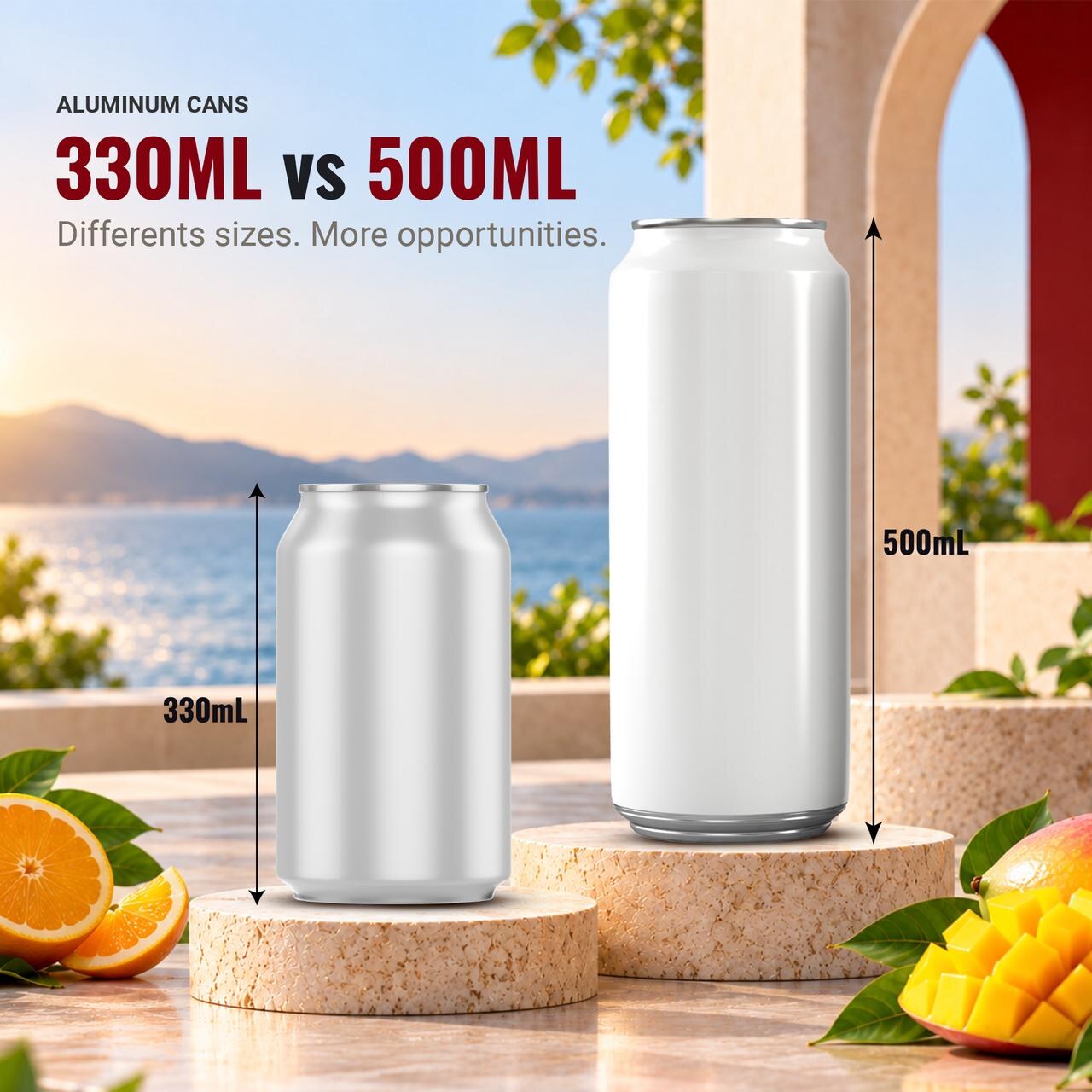
Rather than assuming 330ml or 500ml is inherently better, the choice of can volume depends on the business model and consumption habits in the target market.
330ml Aluminium Can: The Standard For Mass Retail
The 330ml aluminium can is a widely used single-serve format in international markets. Its compact size makes it easy to roll out consistently across hypermarket chains, convenience stores and vending machines, matching the one-off refreshment needs of most consumers.
500ml Aluminium Can: For Larger-Volume Demand
The 500ml aluminium can suits customer groups or markets that favour larger volumes for fruit juices, carbonated soft drinks or sports beverages. Choosing the 500ml format lets distributors diversify their portfolio to increase purchase value per occasion.
Packaging Capability At Viet International Company (VIC)
To help importers optimise their portfolio for each market group, Viet International Company (VIC) invests in and combines production capability across all three common packaging formats.

- 330ml & 500ml aluminium can solutions: operated under an ISO 22000 food-safety management system combined with HACCP principles applied at the factory, used for core product lines such as PANIE fruit juice, chia-seed juice and SITI soft drinks.
- Glass bottle solutions: suited to fruit juices with pulp or jelly, meeting aesthetic requirements and technical standards under the OEM/ODM manufacturing contract.
- Export documentation support: VIC helps provide the product Certificate of Analysis, Certificate of Free Sale, and supports food-facility registration procedures as required by the FDA (US market) and HALAL certification within each specific scope.
Evaluating The Packaging Option For Your Project
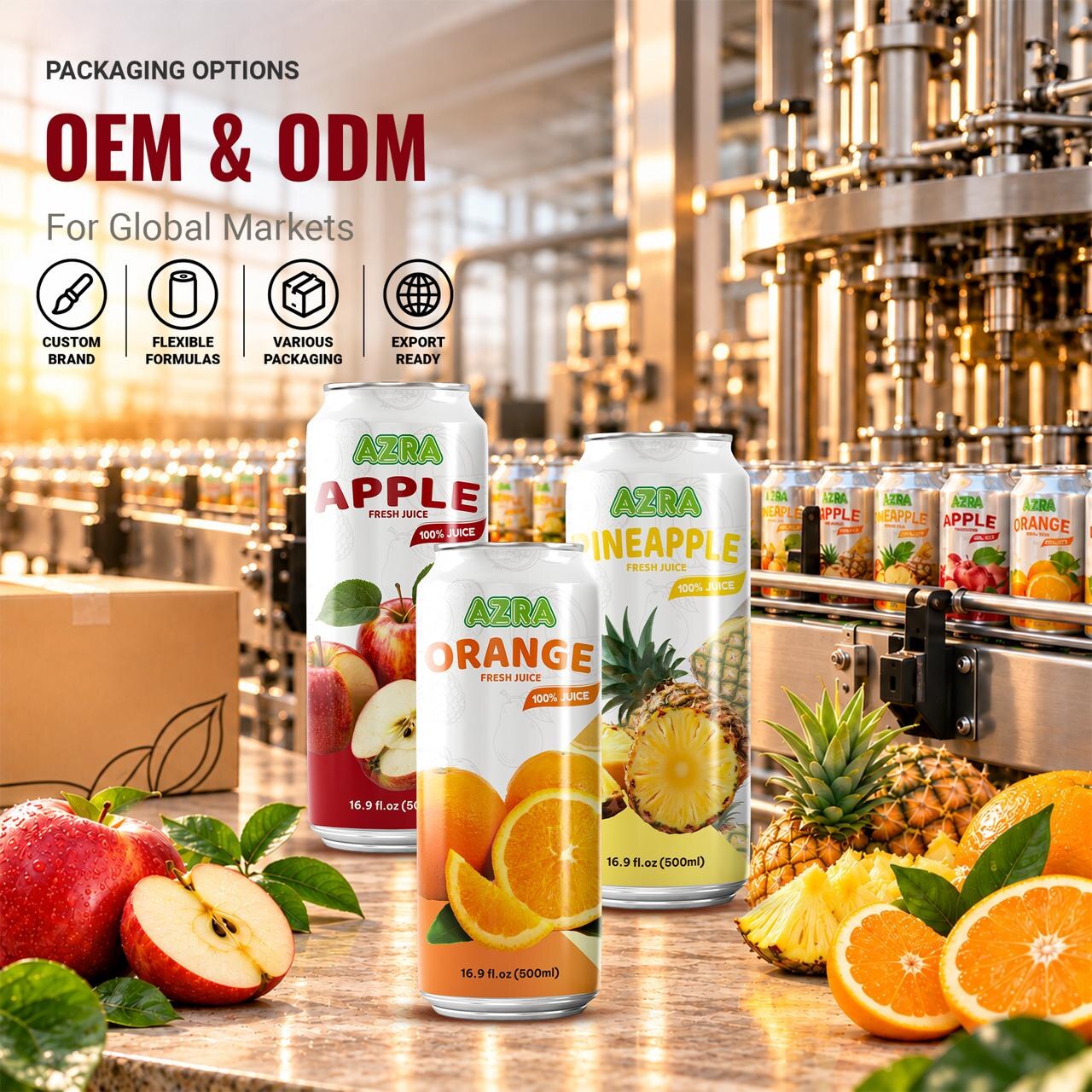
Packaging should be defined together with the product formula, the target market and the distribution plan from the development stage. Choosing the right format affects not only the product experience but also how the export order is packed, loaded and organised logistically. For OEM/ODM and Private Label projects, VIC can work with partners to evaluate a suitable packaging option based on:
- Product format: comparing 330ml and 500ml aluminium cans and the bottle options that suit each beverage line.
- Logistics plan: assessing carton specification, pallet, loading and the factors that affect shipping cost.
- Product compatibility: reviewing the formula's requirements for each material and packaging format.
- Sampling & product development: supporting real sample runs so partners can evaluate before full production.
If your business is developing a new product, expanding a portfolio or looking for a packaging option for a specific export market, send your project details to VIC to evaluate a suitable option together.